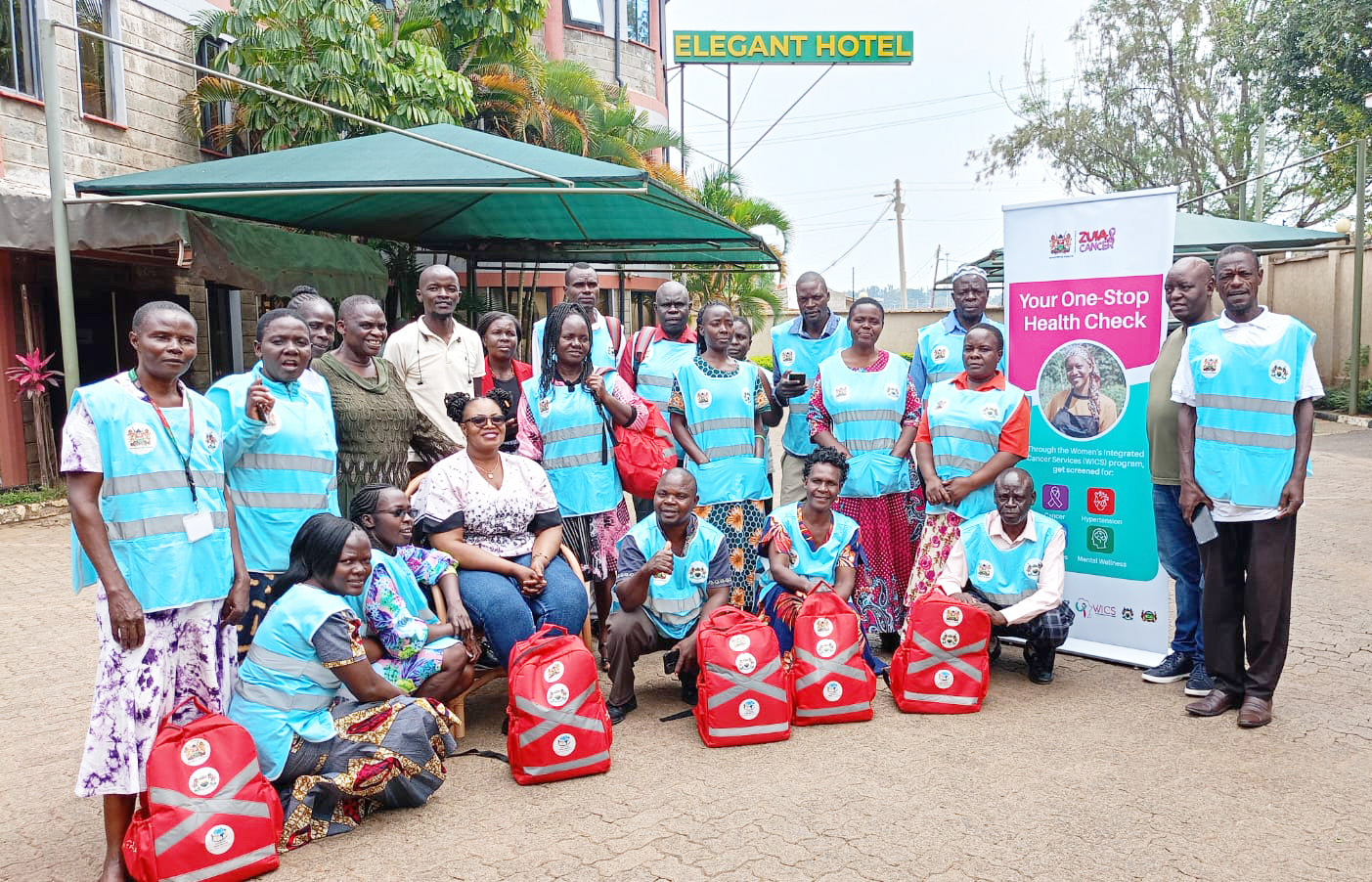
Key Result Area Two: Screening and Treatment of Cervical Precancer Lesions
Operational objective 1: Ensure health facilities have adequate capacity/service readiness for screening and precancer treatment.
Actions
- Carry out periodic assessment of the national cervical cancer screening and treatment program.
- Conduct quantification, forecasting and costing of all cervical cancer screening and pre-cancer treatment HPTs.
- Procure and equitably distribute the essential screening commodities and treatment devices.
- Upgrade primary health facilities to meet minimum infrastructure standards for cervical cancer screening and treatment.
Operational objective 2: Ensure provision of quality cervical cancer screening and pre-cancer treatment services
Actions
- Scale up of HPV testing coverage from 6% to 50% in 2027 and to 70% in 2030.
- Scale up of treatment coverage of PCL from 43% to 70% in 2027 and 90% in 2030.
- Create a “call and recall” system for invitation and tracking for eligible women across the screen, triage and treat cascade.
- Implement a national HPV sample referral and testing cascade, including measures such as SOPs, courier schedules, barcoding, specimen rejection criteria, andlab information management system (LIMS) integration.
Operational objective 3: Strengthen Health Care worker capacity for cervical cancer screening and treatment
Actions
- Identify health worker training gaps (pre-service and in-service).
- Support pre-service training on cervical cancer screening and treatment in universities and colleges.
- Continuous in-service training for HCW to update their knowledge and skills.
Operational objective 4: Increase community awareness and demand creation for screening
Actions
- Review, print and disseminate IEC materials for key opinion leaders and general public.
- Create awareness on cervical cancer screening and treatment among HCWs and CHPs
- Enhance awareness creation throughout the year in line with the Cancer Communication Strategy
Operational objective 5: Enhance data management and use in decision making
Actions
- Support adoption of EHR systems in screening and treatment
Operational objective 6: Increase financial prioritization for cervical cancer screening and treatment in national and county health budgets, as well as other financing mechanisms (costs of tests, devices, consumables, maintenance, and provider payment mechanisms)
Actions
- Support adoption of EHR systems in screening and treatment
- Advocacy, sensitization and resource mobilization from domestic sources.
- Engage private insurance companies to include HPV testing in their packages.
- Identify and engage development partners/donors to fund screening and treatment related interventions through existing health sector programs.
- Explore private lab partnerships with clear QA and capped tariffs.
Operational objective 7: Strengthen Leadership and Governance for cervical cancer screening and precancer treatment at both national and county level
Actions
- Strengthen national level coordination of cervical cancer elimination interventions.
- Improve county level coordination of cervical cancer elimination interventions.
- Support counties leadership to implement cervical cancer elimination policies in their own context.
- Institute quarterly performance reviews with corrective action plans.
Operational objective 8: Ensure quality assurance in cervical cancer screening and treatment
Actions
- Institutionalize a process of routine continuous quality improvement in the cervical cancer screening and treatment program in line with the Cancer MEAL framework.
- Develop an advisory framework (within the National Cervical Cancer Elimination TWG) to safeguard quality and ensure the country adopts clinically validated HPV tests and other screening technologies.